


Whether you’re refreshing an existing bedroom or settling into a new home, a thoughtfully planned wardrobe should sit high on your priority list. And if it doesn’t, may we gently suggest that it should.
Poorly designed wardrobes are such a deal breaker in my view. Your wardrobe can offer plenty of space, but if it isn’t designed around your daily needs, it will never feel organised — no matter how much storage it promises. You could consider wardrobe design one of our love languages — where our love of design and organisation meet.
PSA Alert! Yes, we all admire the expansive walk-in wardrobe with perfectly spaced shelves and curated displays as seen on Pinterest and Instagram. But for most of us, reality looks more like a wall of cupboards — and if you’re lucky, a long one.
Good design isn’t about replicating an image. It’s about understanding your space, your habits, and creating a wardrobe that works hard behind the scenes. Regardless of size or layout, these are our key considerations that shape every successful wardrobe design.
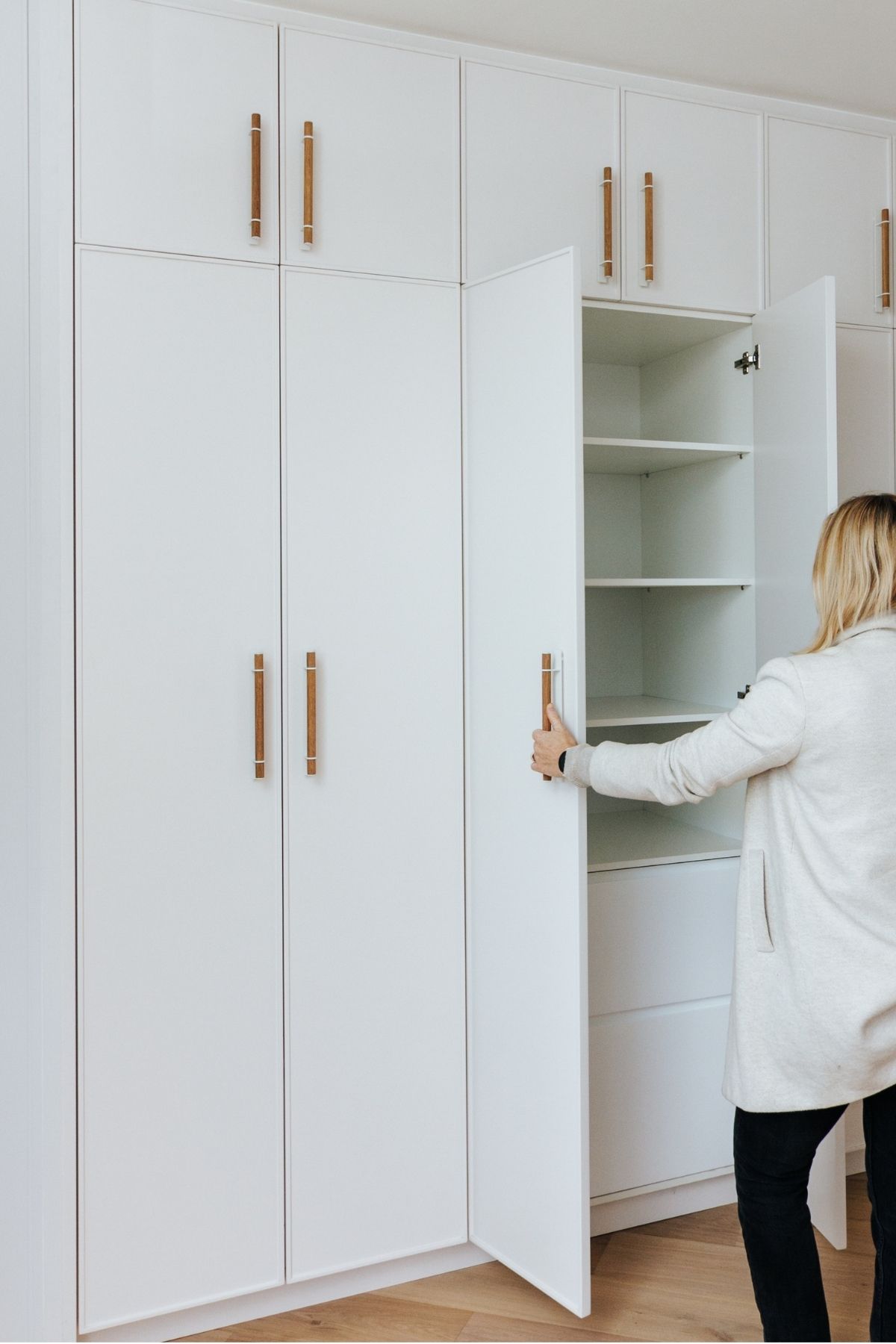
Do You Hang Or Fold?
This is our starting point. Understanding how our clients store their clothing dictates the entire internal configuration. While many standard wardrobes offer a generic mix of hanging and shelving, this rarely reflects how people actually live. If you hang almost everything, we prioritise generous hanging sections. If you prefer folded stacks, we plan for shelving or drawers accordingly.
Visually, I find nothing more satisfying than a beautifully ordered rail — garments hanging neatly, arranged by colour, creating an immediate sense of calm. For me, clothing is far easier to maintain on a hanger than stacked on open shelving. From singlets and shirts to skirts, dresses, trousers, hoodies and jackets — even knitwear where possible — I prefer to hang it all. And if something must be folded, it belongs tucked away in a drawer, out of sight rather than displayed on an open shelf.
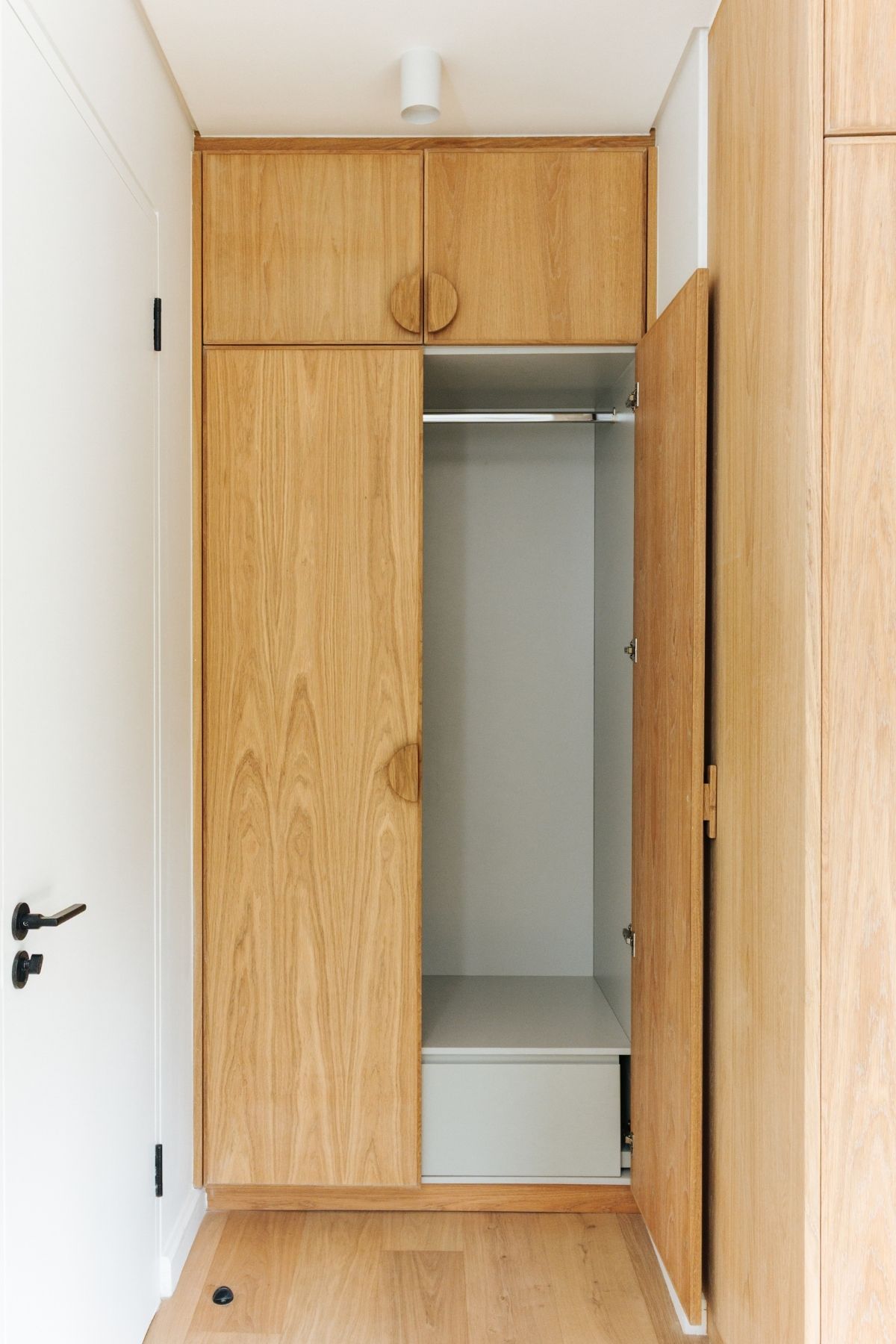
As part of the process we also consider garment length. Maxi dresses, long coats, tailored jackets — they all require dedicated vertical space. For men’s wardrobes, we typically allow more hanging space than expected, with varied rail heights to accommodate shirts, jackets and trousers efficiently.
A wardrobe should support your routine, not force you to adapt to it.
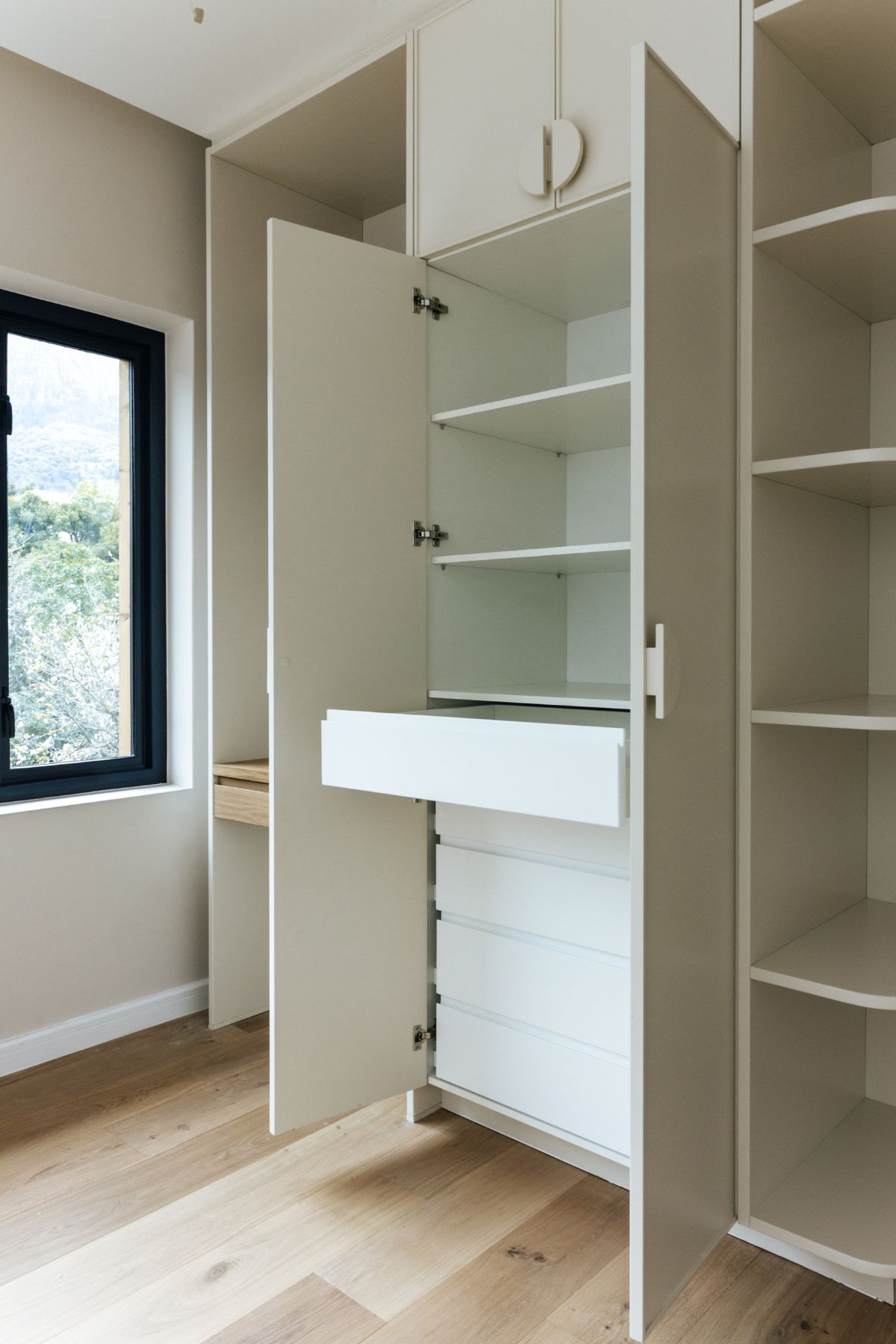
Shelves or Drawers?
Once hanging versus folding is established, we refine further: open shelving or concealed drawers?
Drawers provide visual calm. They discreetly house everyday essentials — underwear, sleepwear, activewear, knitwear — keeping surfaces streamlined. Open shelves can be practical higher up, but at lower levels they quickly become impractical and visually cluttered.
From a budgeting perspective, shelves are more cost-effective than multiple drawers. The difference lies in the hardware — drawer runners vary significantly in quality, and as the specification increases, so does the cost. That said, accessibility should never be compromised. Open shelves at the bottom of a wardrobe are typically awkward to reach and difficult to maintain neatly. For this reason, we almost always recommend drawers along the lower levels for ease and longevity.
We typically assign drawers for accessories, underwear, socks, sleepwear, beachwear and sports clothes. Knitwear and shorts that aren’t hung are also best suited to drawers. Concealed storage always wins in keeping the wardrobe feeling neat and tidy – even when real life is happening inside.
Function first. Always.
Where Do My Accessories Go?
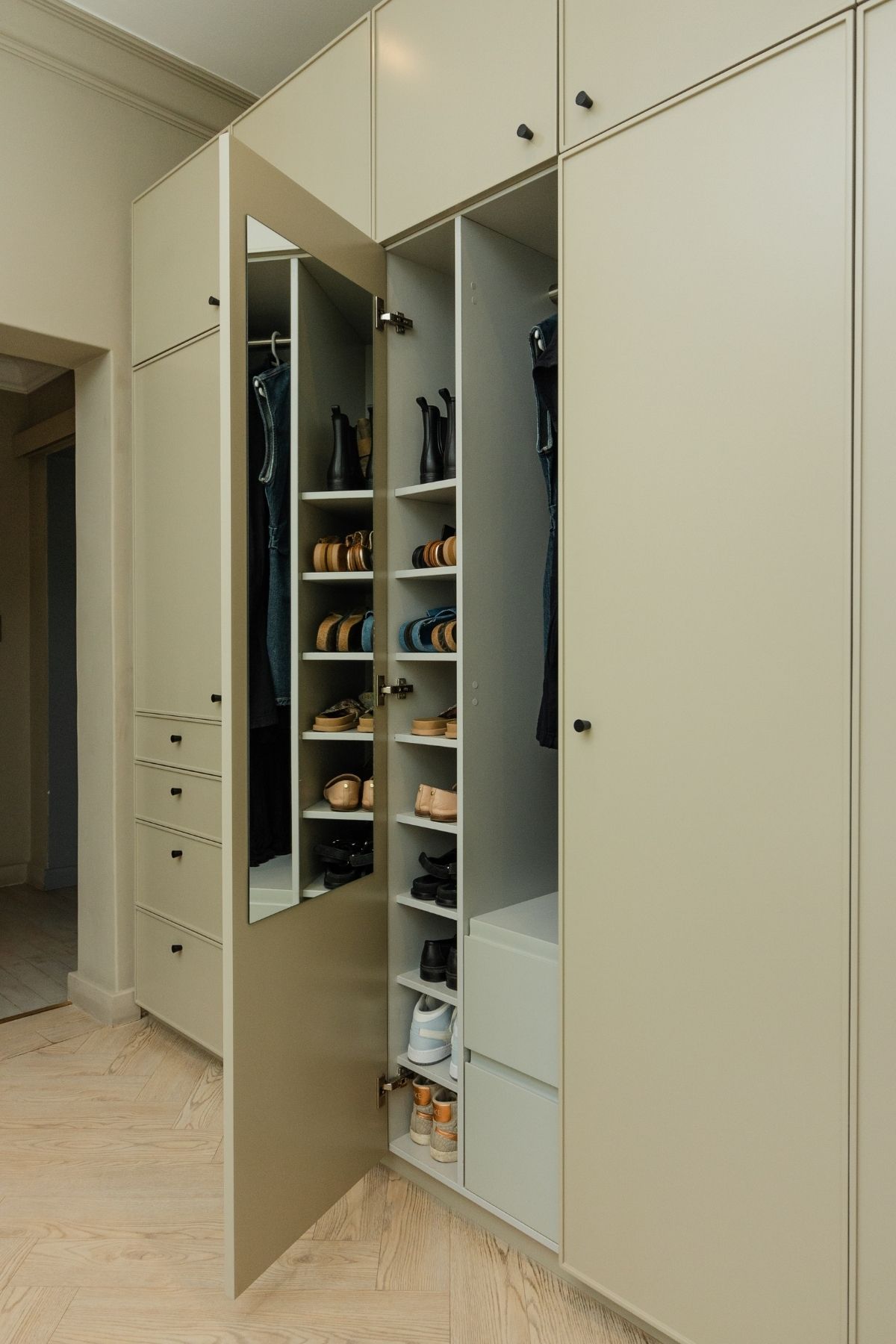
Shoes are usually the headline act here.
Are you storing sneakers, heels, boots? Tall boots require dedicated height allowances. We recently read a statistic suggesting the average woman has 40 pairs of shoes, compared to the average man who owns 10 pairs of shoes. Maximising storage is therefore a key priority.
From a space planning perspective, more shoes can fit on a flat shelf (stored heel to toe for maximum efficiency), however my preference is for vertical shoe hatches as they make better use of height rather than consuming valuable horizontal space.
We also plan for handbags, hats and jewellery. Not every item can have its own compartment, so we establish storage priorities early. In some cases, relocating accessories — perhaps to a home office or dressing console — can free up valuable wardrobe space for clothing.
If you follow me on instagram, you may have seen that I store my bags and personal accessories in my home office. Since I don’t have tons of wardrobe space in my bedroom, this was a simple and effective way to maximise clothing storage where it mattered most.
Thoughtful editing is part of the process.
Mirror Mirror On The Wall
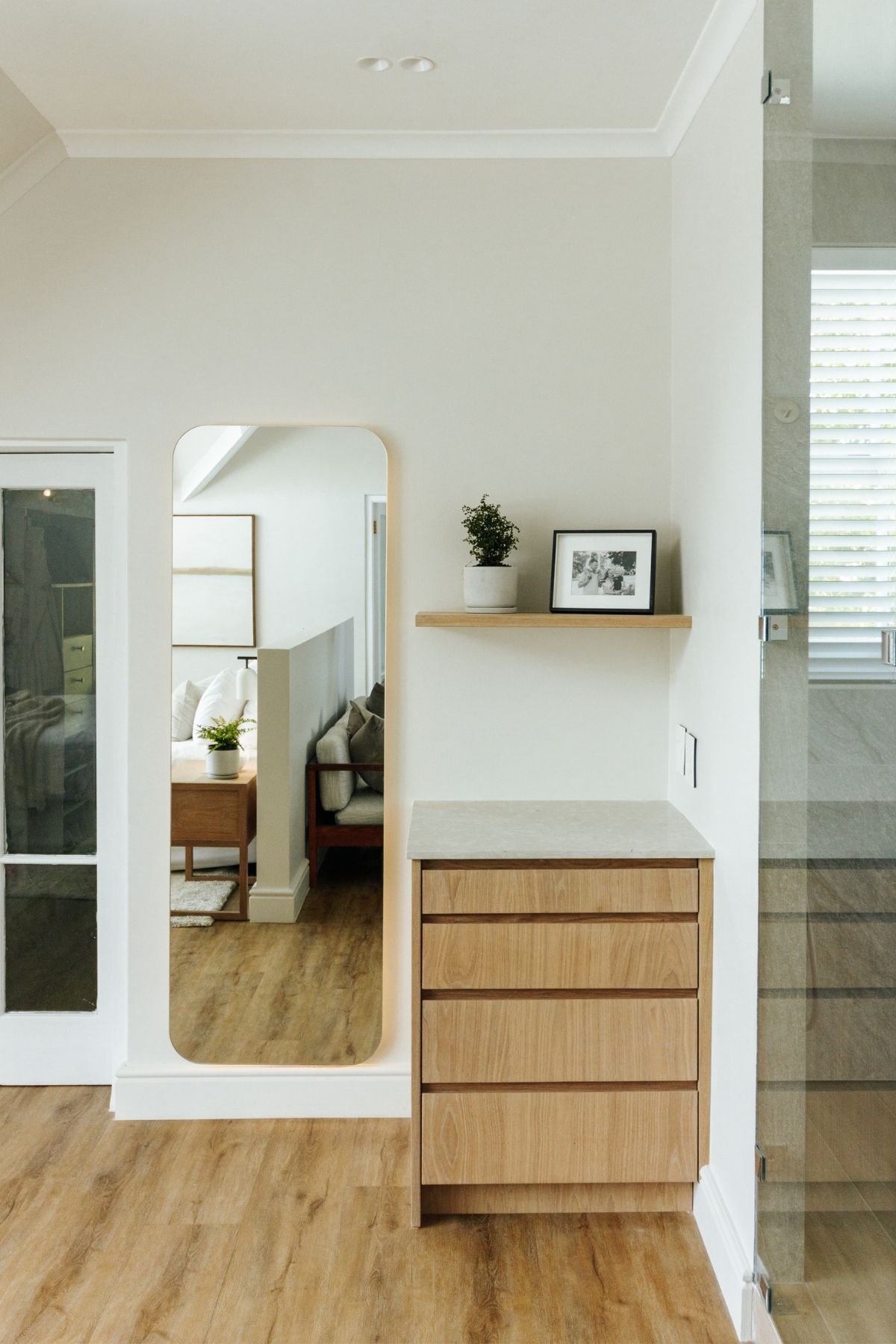
While many women dream of a beautifully integrated vanity within their wardrobe, we generally advise against combining the two. The reason is simple: space. Unless you have generous wall area to work with, incorporating a makeup station within your wardrobe reduces valuable storage real estate.
Instead, we recommend creating a dedicated vanity area elsewhere — either within the bathroom or as a standalone feature in the bedroom. This allows your wardrobe to focus entirely on storage, while your vanity becomes its own design moment within the room.
Practically speaking, makeup areas function best in or near a bathroom, where access to water and easy clean-up makes daily routines far more efficient. Designing your wardrobe is also about how effortlessly it supports the way you live.
Layout
Having gone through what you own and what your storage priorities are, we then move on to layout planning.We often divide wardrobes into “main” and “secondary” zones.
The main wardrobe holds your daily essentials — the pieces you reach for most often. The secondary wardrobe contains all your hard working clothes – your lounge wear, your collection of hoodies that never leave the house, your sports gear, and hose sentimental pieces you can’t quite part with. Where space allows, we even create a dedicated outerwear section. Bulky winter jackets deserve breathing room.
For the most part, we try not to take a seasonal approach to wardrobe design. Instead, we prefer a cohesive system where everything is visible year-round. A Less is More philosophy encourages clarity — and helps you truly understand what you own.
The Look and Feel
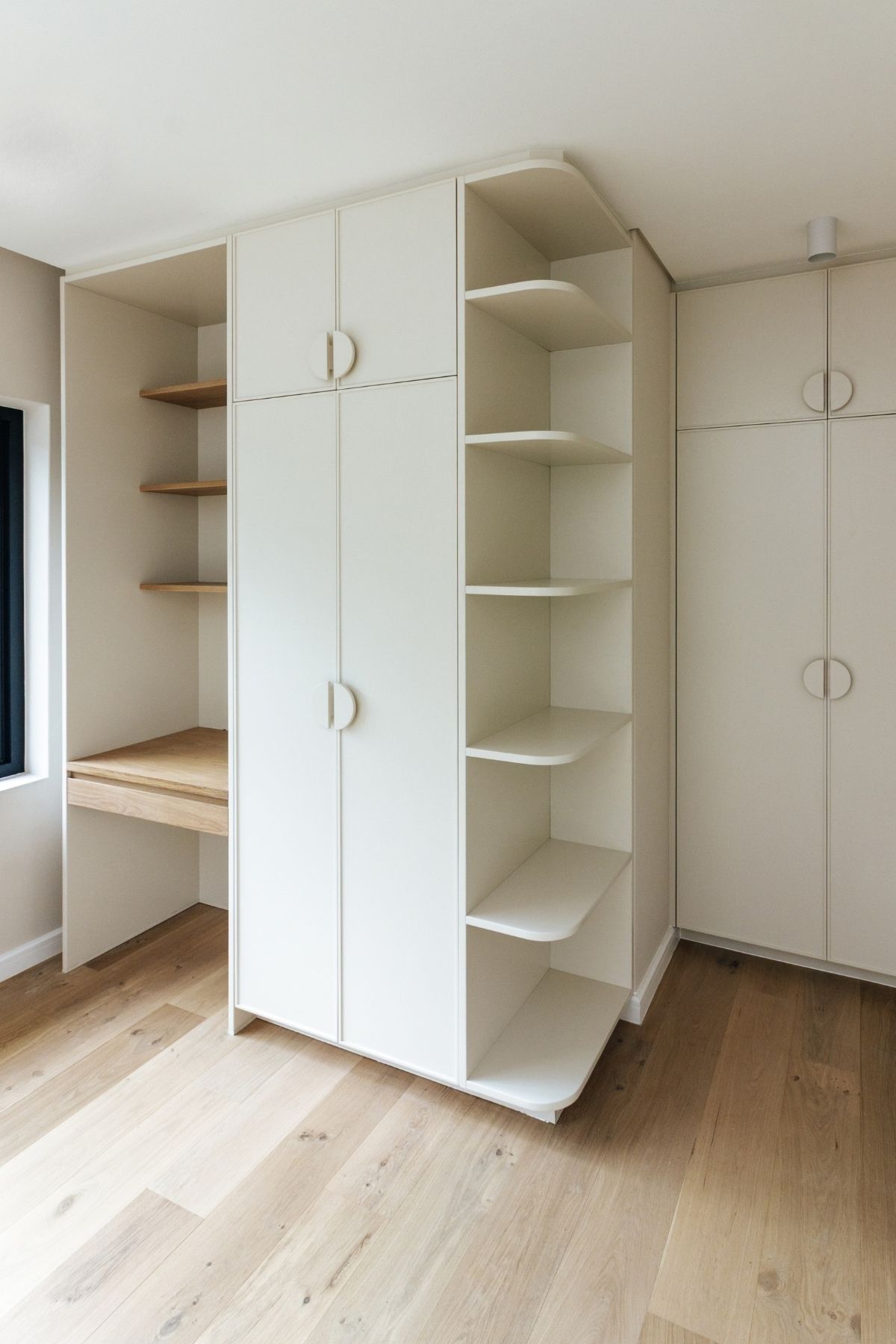
You’ve no doubt heard the phrase, it’s what’s inside that counts. In wardrobe design, however, those cupboards doors play a pretty important role.
We’re seeing more and more beautifully considered door fronts — an effortless way to elevate a simple cupboard carcass. Interestingly, when discussing joinery with clients, the external aesthetic is often where attention gravitates first, sometimes ahead of internal functionality.
Choosing the overall look and feel for your wardrobe is very much related to the style and colour palette of your home, and specifically your bedroom. In classic interiors, a shaker profile feels timeless and appropriate. For more contemporary spaces, a slim shaker edge detail offers subtle refinement. And in truly minimal settings, a flat panel can be incredibly effective — though in this case, materiality becomes the hero. Door detailing varies greatly and should not be overlooked as part of the design process.
When it comes to colour, we always recommend choosing something you’ll feel comfortable living with long term. Personally, I favour colour-matching joinery to the walls so the units “disappear” against the walls. This doesn’t mean the design needs to feel flat or uninspired — subtle detailing can still provide interest.
White remains a timeless choice, and melamine is the most cost-effective interior option. If budget permits, a light wood veneer introduces warmth. It’s durable against scuffs and scratches — especially in family homes — and works beautifully across most design styles. Internally, white melamine is the most common specification, though other lighter-toned interiors can elevate the finish slightly.
As always, it comes down to thoughtful alignment between aesthetic, practicality and longevity.
Hardware + Finishes
Consider integrated LED lighting if budget allows. It introduces both practical task lighting and a soft ambient glow.
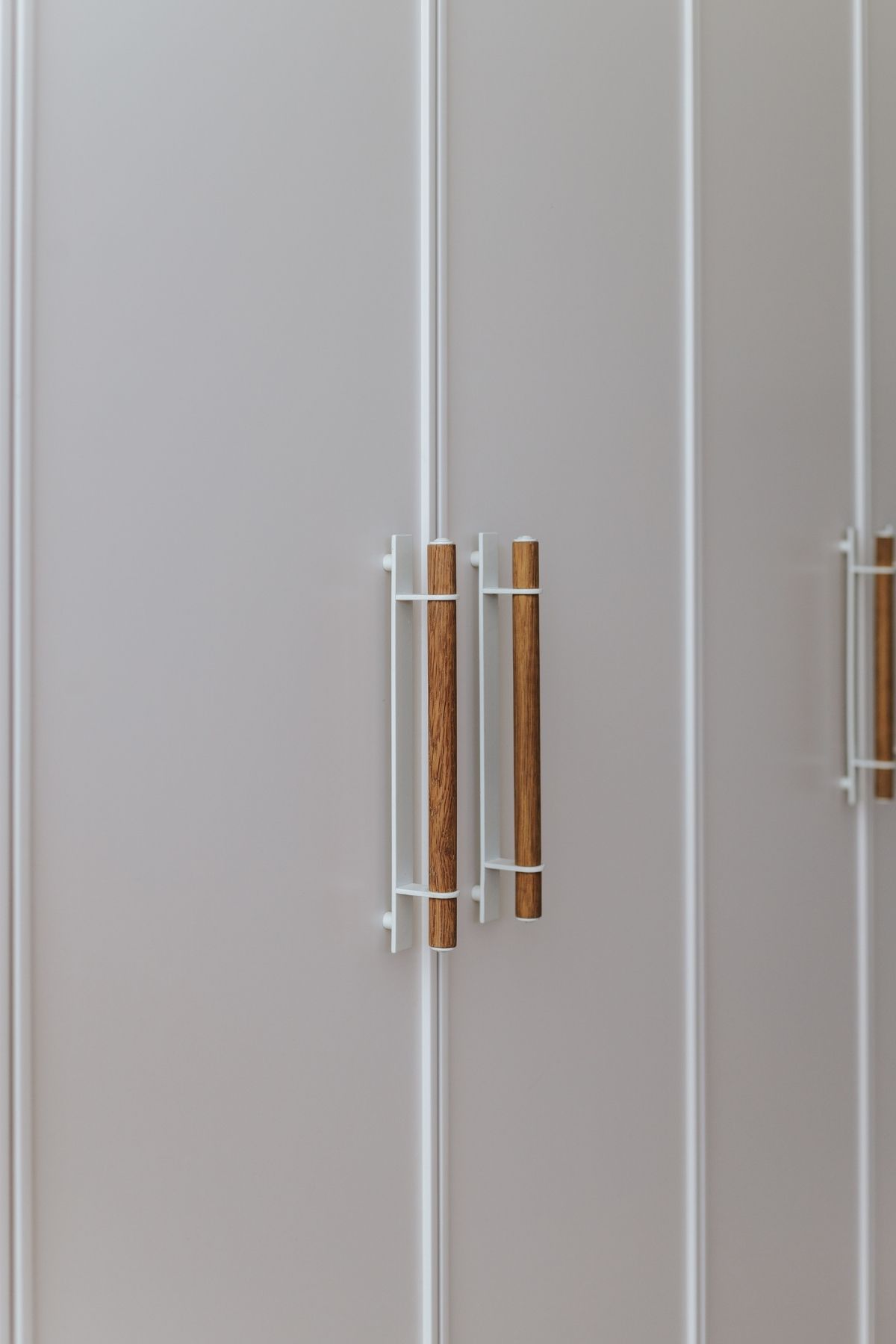
Handles are the final layer — the jewellery of your joinery. We favour well-made hardware over push-to-close systems, especially in high-use areas or children’s rooms. To keep costs down a simple and sleek knob is a good choice, however feature handles can elevate even the simplest of designs.
A well-designed wardrobe doesn’t just store your clothing — it supports your routine, protects what you’ve invested in, and quietly elevates your everyday.
If you’re ready to rework your wardrobe — inside or out — we’d love to guide you through the process. Contact us at hello@thehomestudio.co.za to arrange a personal design consultation.